1902 Milwaukee Road Depot
Welcome to the 1902 Milwaukee Road Depot.
The story of the depot actually began a half century before it was built. The mid-nineteenth century saw a tremendous boom in the railroad industry. Hundreds of new railroads were planned by optimistic entrepreneurs seeking their fortunes by opening new markets for their goods, (or by becoming railroad builders). In 1852 the Racine, Janesville & Mississippi RR. was chartered to connect the port of Racine to the great shipping corridor of the Mississippi River. A few years earlier, in 1847, another enterprise, the Milwaukee & Waukesha RR. had also been organized, at first to link the named cities, but plans quickly changed to also build to the Mississippi.
By 1872, after a series of expansions and acquisitions the R.J.& M. had become the Western Union RR. and ran to Savanna, Illinois. The M. & W. RR. had become the Milwaukee & St. Paul RR. and had acquired the W.U.RR. in 1869. The M. & St. P. had built tracks to Chicago which crossed the W.U.RR. at the village of Parkersville seven miles west of Racine. The railroad called the crossing Western Union Junction and from 1876-1901 that became the post office name for the village as well. The first depot at the location was reported to have been a re-purposed boxcar, but at some point a depot and freight house had been built which was destroyed by fire in 1883.
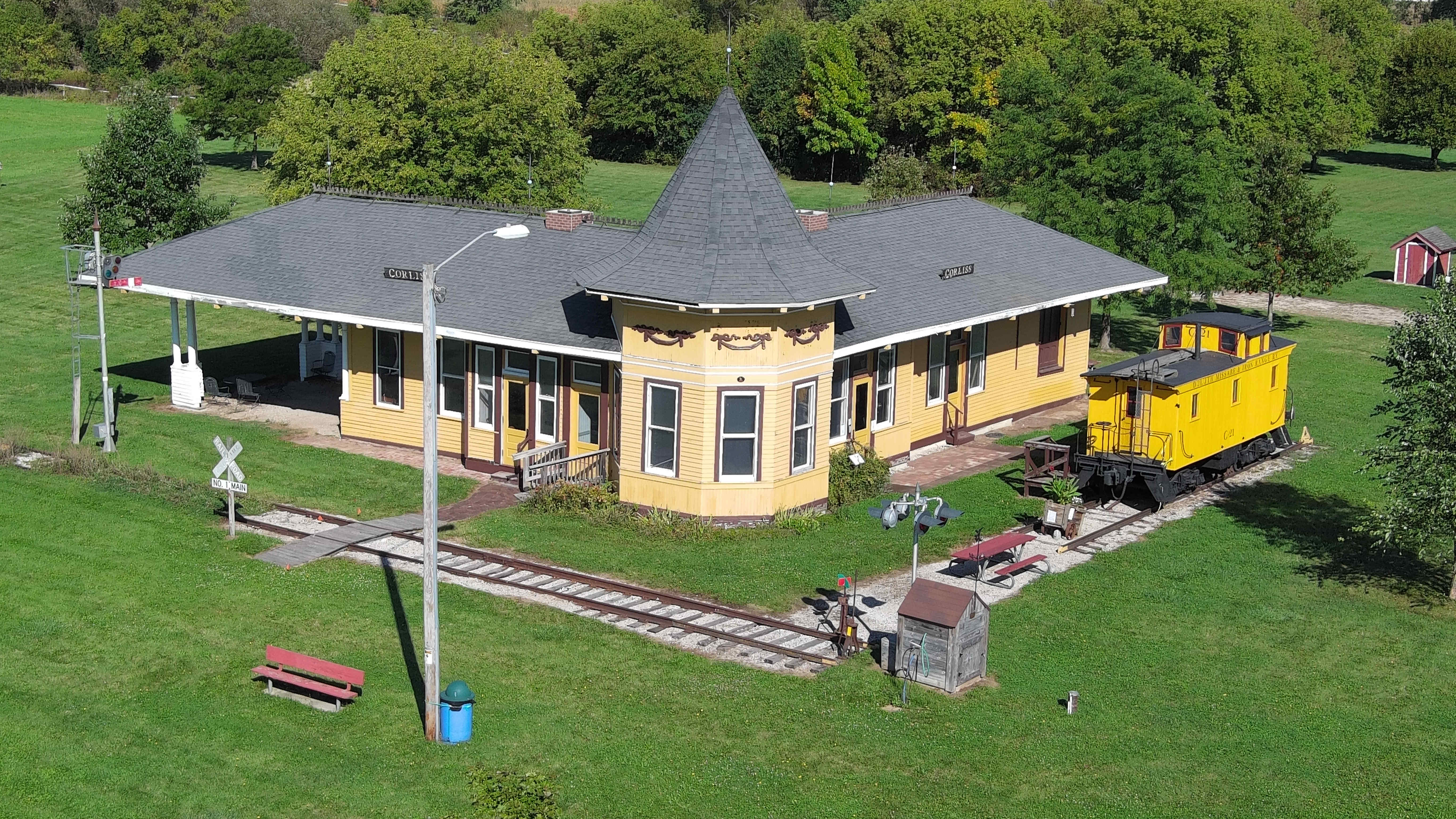
The replacement structure lasted only until 1901 when it also was consumed by fire. That same year saw the relocation of the Brown Corliss Engine Company, a producer of steam engines, from Milwaukee to Western Union. To honor the new industry, the village name was changed to Corliss and the new depot structure bore that name when finished in 1902. The new station was built as an “L”-shaped structure and featured a Victorian-inspired octagonal turret allowing the stationmaster to view the tracks in all directions. The perimeter windows gave view of both roadbeds.
Corliss Engine went bankrupt in 1907 and the factory was empty until 1923 when the B. F. Sturtevant Company of Boston, Massachusetts bought their assets. On October 2, 1923, the village was renamed Sturtevant, as we know it today. The east–west line ceased operation years before but the depot continued servicing the north–south line until the new Amtrak depot on Highway 20 replaced it in 2006.
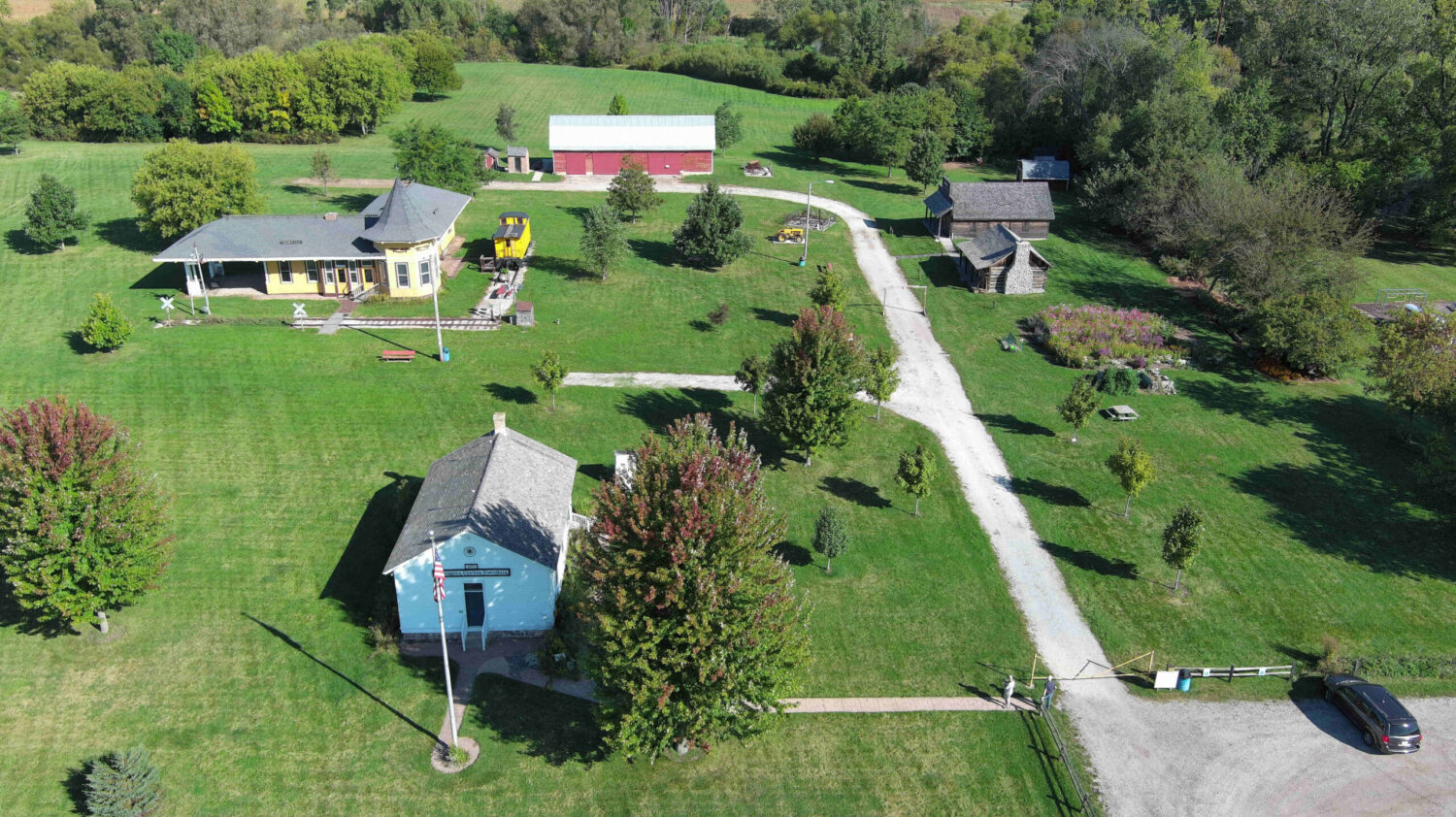
Ultimately, the Canadian Pacific Railroad owned the depot and planned to demolish the aging structure. The Western Union Junction Railroad Club wanted to save the depot, but lacked the funding to preserve the deteriorating building. The Caledonia Historical Society purchased the depot and began readying it for a move. Heritage Movers initially cut the building into three sections, each 32 feet wide, 40 feet long and 25 feet tall. The movers later removed the roof and turret to accommodate utility lines for the trip.
After getting approval on a route to relocate the structure at the Caledonia Historical Village, four trailers carrying the depot began the 4 mph journey at one minute after midnight on Monday October 26, 2009 and completed the trek about 3:45 a.m.
Renovation of the depot took almost three years of effort by members of the Society. It including the help of work release inmates from Racine Correctional and engaging a Hawaiian designer to create templates for the scrollwork on the outside. The newly renovated Milwaukee Road Depot opened to the public in 2012.
The stationmaster’s section of the depot contains his original desk with chair and typical communication devices such as a telegraph key and a scissors telephone. Train order hoops (forks) used to “hand up” running orders to the Engineer in the engine and the conductor in the caboose as the train zips by the station hang on the wall in the turret.
The men’s waiting room and restroom is located adjacent to the stationmaster’s area. A separate women’s waiting room and restroom, is located to the right of the hallway on the other side of the stationmaster’s area. This area provided a more gentile environment from the cigar smoking men.
A model railroad layout in the men’s area often draws the delight of our younger and young at heart guests. The stairs alongside the layout lead to what was the freight room. A sliding door opens to a loading dock at the level of freight cars. The freight area, currently used as a workroom, will become a learning center.
A 1927 Lake Superior and Ishpeming caboose sits alongside the depot. Moved from a location on Four Mile Road, the restored caboose offers a taste of what “riding the rails” was like.